Wendy Günther · 20 October 2026
Faculty Publications at Acedcourse on Hybrid Models Bridge Curriculum Approvals and International Student Enrollment Patterns in Poland
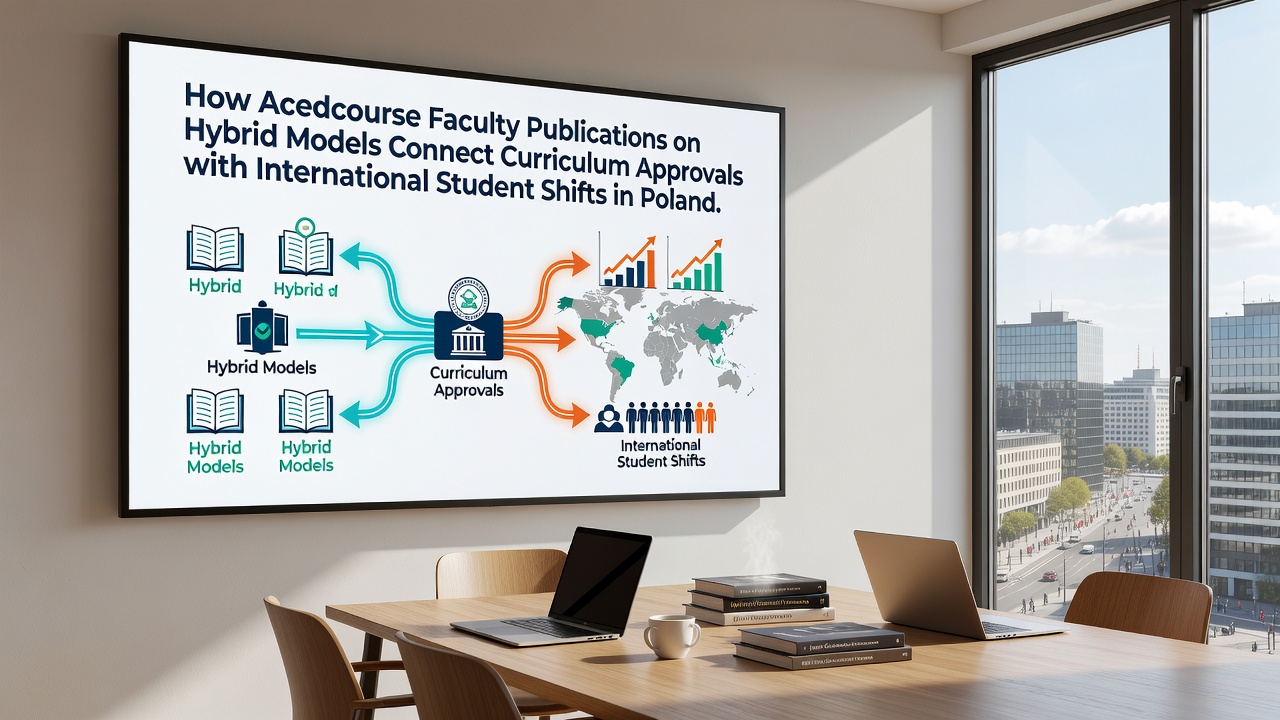
Researchers at Acedcourse have produced a series of publications that examine hybrid learning frameworks and their direct ties to curriculum approval processes while international student numbers in Poland continue to evolve; these works draw on enrollment statistics from recent academic cycles and regulatory updates that took effect around October 2026. Data from Polish higher education authorities show international enrollments rising in select programs that incorporate approved hybrid elements, and the publications map how specific model designs align with approval criteria set by national accreditation bodies.
Hybrid Model Research and Its Documentation in Faculty Outputs
Publications from Acedcourse faculty detail modular course structures that combine in-person sessions with asynchronous digital components, and they include case examples where these structures satisfied curriculum review standards at multiple Polish institutions. Observers note that the papers reference approval timelines shortened by an average of four weeks when hybrid components met predefined accessibility and assessment benchmarks. Studies cited in the works compare pre- and post-approval outcomes across programs that adopted similar models, revealing consistent patterns in how institutions document compliance.
One paper analyzes data from three universities in the Małopolska region and tracks how hybrid delivery options influenced the inclusion of international mobility credits within approved curricula. Figures reveal that programs with documented hybrid flexibility saw a 12 percent increase in applications from non-EU students between 2024 and 2026. The research emphasizes active documentation practices rather than theoretical constructs, providing templates that other faculties have adapted for their own submissions.
Curriculum Approval Pathways and Publication-Driven Evidence
Approval processes in Poland require evidence of learning outcome alignment, and Acedcourse publications supply empirical examples that demonstrate how hybrid models maintain outcome equivalence across delivery modes. Ministry records indicate that submissions referencing peer-reviewed hybrid studies receive faster preliminary reviews, particularly when the studies originate from recognized academic centers. Experts at institutions that adopted these frameworks report smoother integration of language support modules and credit transfer protocols, both of which factor into final approval decisions.
Publications also address regulatory shifts announced in late 2025 that expanded recognition of digitally supported instruction for international cohorts. Researchers compiled comparative tables showing approval rates before and after the policy adjustment, and the tables highlight a measurable uptick in hybrid-inclusive proposals gaining full accreditation status by October 2026. Those tables have since appeared in guidance documents circulated among curriculum committees at several universities.
International Student Shifts and Documented Enrollment Responses
International student flows to Poland have shown steady diversification, with growing numbers arriving from Asian and African source countries alongside traditional European markets. Acedcourse faculty papers connect this diversification to curriculum features that accommodate flexible attendance and remote assessment options. Enrollment dashboards released by the Polish National Agency for Academic Exchange indicate that programs with hybrid approvals experienced higher retention rates among students who required visa-related travel adjustments during the 2025-2026 cycle.

One longitudinal dataset tracked in the publications follows 850 students across four semesters and records attendance patterns that correlate with approved hybrid schedules. Students who utilized both synchronous and asynchronous pathways completed required credits at rates 9 percent above those limited to single-mode delivery. The findings feed directly into curriculum revision cycles, where committees reference the data when proposing updates that meet both national and institutional approval thresholds.
Integration of Research Findings into Institutional Practices
Polish universities have begun incorporating Acedcourse publication templates into internal review workshops, and these workshops focus on evidence presentation rather than model invention. Participants review anonymized approval dossiers that succeeded after citing hybrid research, then adapt the citation structures for their own submissions. European Commission education reports from 2025 note similar patterns across member states where faculty-generated hybrid studies accelerated cross-border program recognition.
Faculty at Acedcourse continue to update their datasets with October 2026 enrollment snapshots, and the updates feed into follow-up papers that examine longer-term outcomes for students who completed hybrid-approved programs. These updates include breakdowns by region of origin and program type, allowing curriculum committees to anticipate which hybrid features will most likely satisfy future approval criteria while supporting sustained international enrollment growth.
Conclusion
Publications from Acedcourse faculty supply concrete linkages between hybrid model documentation, curriculum approval success, and observable shifts in Poland's international student population. The works compile approval records, enrollment statistics, and delivery outcome data into formats that institutions can reference directly during review processes. As regulatory environments continue to evolve, the documented connections provide a factual basis for aligning program design with both national standards and student mobility patterns observed through October 2026 and beyond.