Alex Lehmann · 8 September 2026
Sustainability Degrees and Startup Connections Drive Enrollment Growth Across Polish Campuses
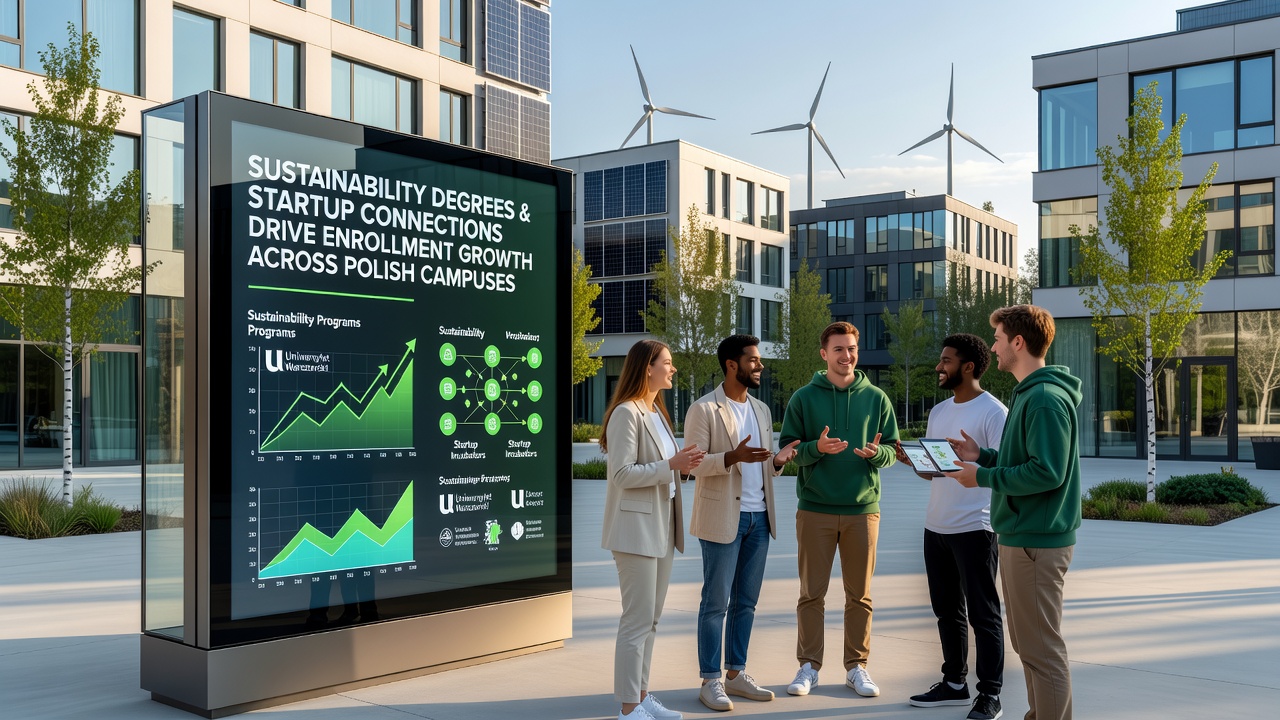
Polish higher education institutions report steady rises in applications for sustainability-focused degree programs, and these increases align with expanded partnerships between universities and local startup ecosystems, according to enrollment data compiled through 2025. Researchers at several Warsaw-based universities tracked application volumes across environmental science, renewable energy management, and circular economy tracks, while noting parallel growth in courses that incorporate entrepreneurship modules. Data from the European Commission shows that green skills training across EU member states expanded by 18 percent between 2023 and 2025, and Polish campuses captured a disproportionate share of that shift because of targeted collaborations with early-stage companies working on waste-reduction technologies and clean-energy solutions.
Enrollment offices at institutions such as the University of Warsaw and Wrocław University of Science and Technology documented double-digit percentage gains in first-year cohorts for these interdisciplinary tracks. Observers note that students increasingly select programs offering direct access to incubator spaces where they can test prototypes alongside founders who already operate ventures in the same fields. This integration creates pathways that link classroom projects with funding rounds and mentorship networks, and the pattern appears most pronounced in cities where municipal governments have designated specific districts for green-tech clusters.
Program Structures and Curriculum Shifts
Departments revised core requirements to include modules on life-cycle assessment, sustainable supply chains, and regulatory compliance for emerging environmental standards. Faculty members incorporated case studies drawn from Polish startups that secured Series A funding for biodegradable packaging and solar-storage systems. Students complete capstone projects that often evolve into business plans presented to investor panels, and several cohorts from 2024 already launched registered companies before graduation. These arrangements differ from traditional lecture formats because they embed real-time market feedback into academic assessment, and administrators report that retention rates in these programs exceed those of conventional environmental science degrees by measurable margins.
September 2026 marks the scheduled launch of three new master’s tracks at Gdańsk University of Technology that combine sustainability metrics with startup acceleration protocols. Program coordinators secured commitments from five regional venture funds to provide seed grants for student teams whose prototypes meet predefined impact thresholds. Similar initiatives at Poznań University of Economics pair coursework on carbon accounting with internships at logistics firms adopting circular models, and preliminary registration numbers indicate continued upward momentum heading into the next academic year.
Startup Ecosystem Integration
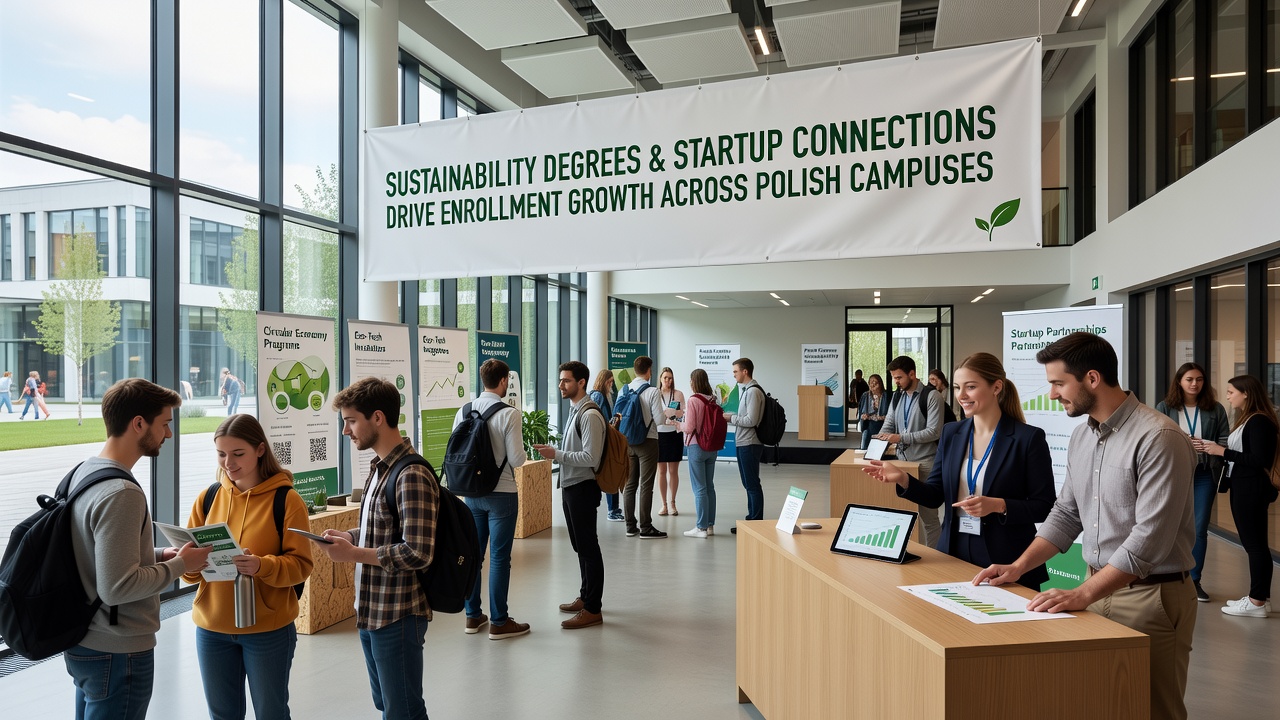
Startup hubs located adjacent to university campuses now host regular demo days where degree candidates present research findings to potential employers and investors. These events replaced earlier career fairs that focused solely on corporate recruitment, and participation metrics show higher attendance when sustainability credentials are paired with viable commercialization plans. Industry reports compiled by the OECD indicate that European startups addressing climate challenges raised 2.4 billion euros in 2025, and Polish teams accounted for a growing slice of that total because of university-supplied talent pipelines. Partnerships extend beyond internships to include shared laboratory facilities, joint patent filings, and co-authored publications that list both academic supervisors and company founders as contributors.
Those who have studied enrollment patterns point out that applicants frequently cite access to these networks as a deciding factor when choosing between Polish institutions and programs abroad. Universities in Kraków and Łódź established dedicated offices that match student skill sets with startup needs in real time, and these matchmaking services operate year-round rather than only during recruitment seasons. Government statistics from the Polish Ministry of Economic Development reveal that firms founded by recent graduates in sustainability fields generated over 1,200 new jobs between 2023 and 2025, underscoring the economic ripple effects tied to these academic expansions.
Regional Variations and Broader Trends
Enrollment growth appears strongest in the western and northern regions where industrial clusters already emphasize renewable manufacturing and logistics decarbonization. Southern institutions report comparable but slightly slower gains, partly because their startup ecosystems focus more heavily on software and fintech than on physical sustainability solutions. Cross-border collaborations with German and Czech research centers add another layer, allowing Polish students to participate in joint projects funded through EU Horizon programs. Figures released by the National Science Foundation in the United States highlight parallel developments in North American campuses, yet Polish models stand out for their tighter integration of regulatory training with entrepreneurial outcomes.
Administrators continue to adjust admissions criteria to accommodate applicants who bring prior experience in green ventures, and scholarship programs now prioritize candidates who demonstrate both technical aptitude and business acumen. Data collected through national higher-education surveys show that these combined degree pathways attract a wider demographic than single-discipline tracks, including mid-career professionals seeking to pivot into emerging sectors.
Conclusion
Polish campuses continue to refine the intersection of sustainability education and startup ecosystems, and the resulting enrollment patterns reflect measurable demand from students and industry partners alike. Ongoing adjustments to curricula and partnership structures position these programs to accommodate further growth, particularly around the September 2026 intake. External funding sources and regulatory frameworks support continued expansion, while regional differences highlight the importance of aligning academic offerings with local economic priorities.